Mining sector

Mining sector partnershipacross pit, plant, and business.

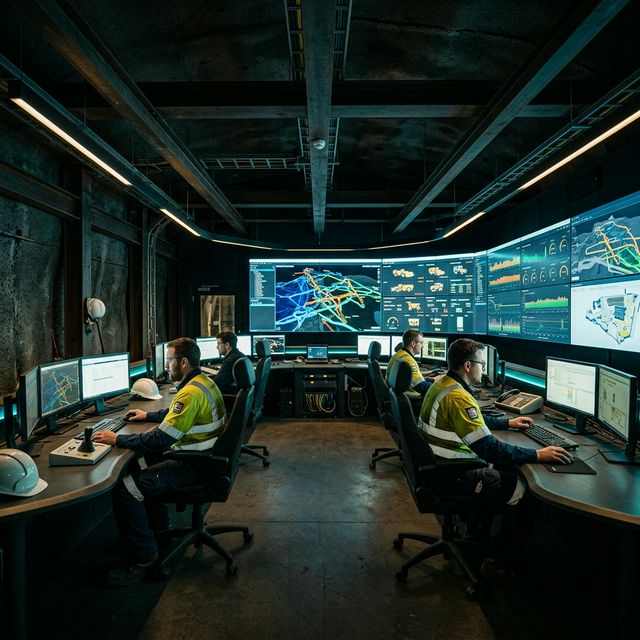
This page is our mining sector story — advisory, practical implementation, and platform delivery with one partner. Supervisors, engineers, and finance leaders rebuild the same production day from different tools; we connect teams to one trusted narrative from the line to leadership. For pit-to-plant software modules, see Mining Functional Modules under Solutions.

Mining remains the primary commercial story across the site.

Ore to ounceOre to ounce1Drill2Blast3Load4Haul5ROM pad6Process plantExplore the story
Who we work with

Built for the people responsible for performance.

Leadership and governance

C-suite leadersRegional and site leadershipGMs and operations leaders

Operations and technical

Plant managersMining managersMetallurgistsEngineering managers

Commercial and enabling

OT / IT headsProcurement and financeHSE stakeholders

The mining challenge

Predictability is the hardest problem in mining. Forecasting is shaky, plans slip, and commitments are made with half the picture. Teams work in silos, data sits in disconnected systems, and confidence erodes before the numbers ever reach a decision-maker.

The result is an operation flying blind. Conditions shift on the ground, in the plant, in the supply chain, and leadership finds out only after a plan has missed. Without a shared, current view, every commitment is a guess and every surprise is a scramble.

Current scene: 01 of 10, Chain Establish

Use arrow keys, Page Up, Page Down, Home, or End to move through the mining story one scene at a time.

Full value chain. One operating picture.
From the ore body to the dollar per tonne; every signal feeds the same picture.
STAGE 01 · DRILLING
The very first signal.
Captured at the bit.
Drill Plan Compliance
Sample Tracking (RFID)
HOLES vs PLAN
142
/ 148
↑ ON TRACK
PATTERN DEVIATION
2.1
%
WITHIN ±3% TOLERANCE
NON-COMPLIANT
3
⚠ FLAGGED FOR REVIEW
RFID SAMPLES
142
CHAIN-OF-CUSTODY LIVE
STAGE 02 · BLASTING
Measure the dilution.
Keep ore where it should be.
Dilution Tracking (RFID)
Blast Pattern Compliance
FIRING ▸ DELAY 17ms
TAGS DEPLOYED 96
ORE DILUTION
1.6
%
↓ 38% vs BASELINE
TAG SURVIVAL
98.2
%
READ POST-BLAST
FRAGMENTATION P80
142
mm
WITHIN PLANT SPEC
STAGE 03 · LOADING
Every bucket tagged.
Every grade known.
Ore Tracking (RFID)
Fleet Management
Collision Avoidance
READER ▸ ACTIVE · 312 TAGS
PIT-TO-DUMP ACCURACY
99.1
%
NO INVISIBLE ROUTING
MISROUTES
0
GRADE PRESERVED
BUCKETS / SHIFT
648
↑ 12% vs LAST WEEK
IDLE REDUCTION
−22
%
FUEL SAVED 4.2 kL
STAGE 04 · HAULING
Run more.
Idle less.
FMS
GPS
Collision Avoidance
FMS 38 min · 84% util
FLEET ▸ 18 / 21 ACTIVE
NO COLLISION RISK · 12 PROXIMITY EVENTS / SHIFT
UTILISATION
84
%
↑ 6 pts vs PLAN
CYCLE TIME
38
min
STABILISED
IDLE TIME
−22
%
NO SHIFT REPORT WAIT
FUEL / TONNE
0.42
L/t
$0.18 / t SAVED
STAGE 05 · ROM PAD
Blend the right feed,
before the plant sees it.
Rompad Blending
Mine Call Factor Tracking
Met Accounting
BLENDED FEED · ±0.8% GRADE VAR
STOCKPILE A · 32.2 kt
STOCKPILE B · 16.3 kt
ROM VOLUME
48.5
kt
TARGET ACHIEVED
GRADE VARIANCE
±0.8
%
↓ FROM ±2.4%
MINE CALL FACTOR
−3.4
%
ROOT-CAUSED AT ROM
AMIRA P754
Aligned
AUDIT-GRADE RECON
STAGE 06 · PROCESS PLANT
Close the loop —
recovery to reconciliation.
Applied Process Controls
Short Interval Control
Met Accounting
MILL
RECOVERY 91.2%
THROUGHPUT 412 tph
REAGENT DOSING ▸ AUTO
GOLD PRODUCED
1,842
oz
SHIFT TO DATE
RECOVERY
91.2
%
↑ 1.8 pts vs PLAN
TAILINGS GRADE
0.08
g/t
COMPLIANCE OK
COST / TONNE
$4.20
vs BUDGET $3.90
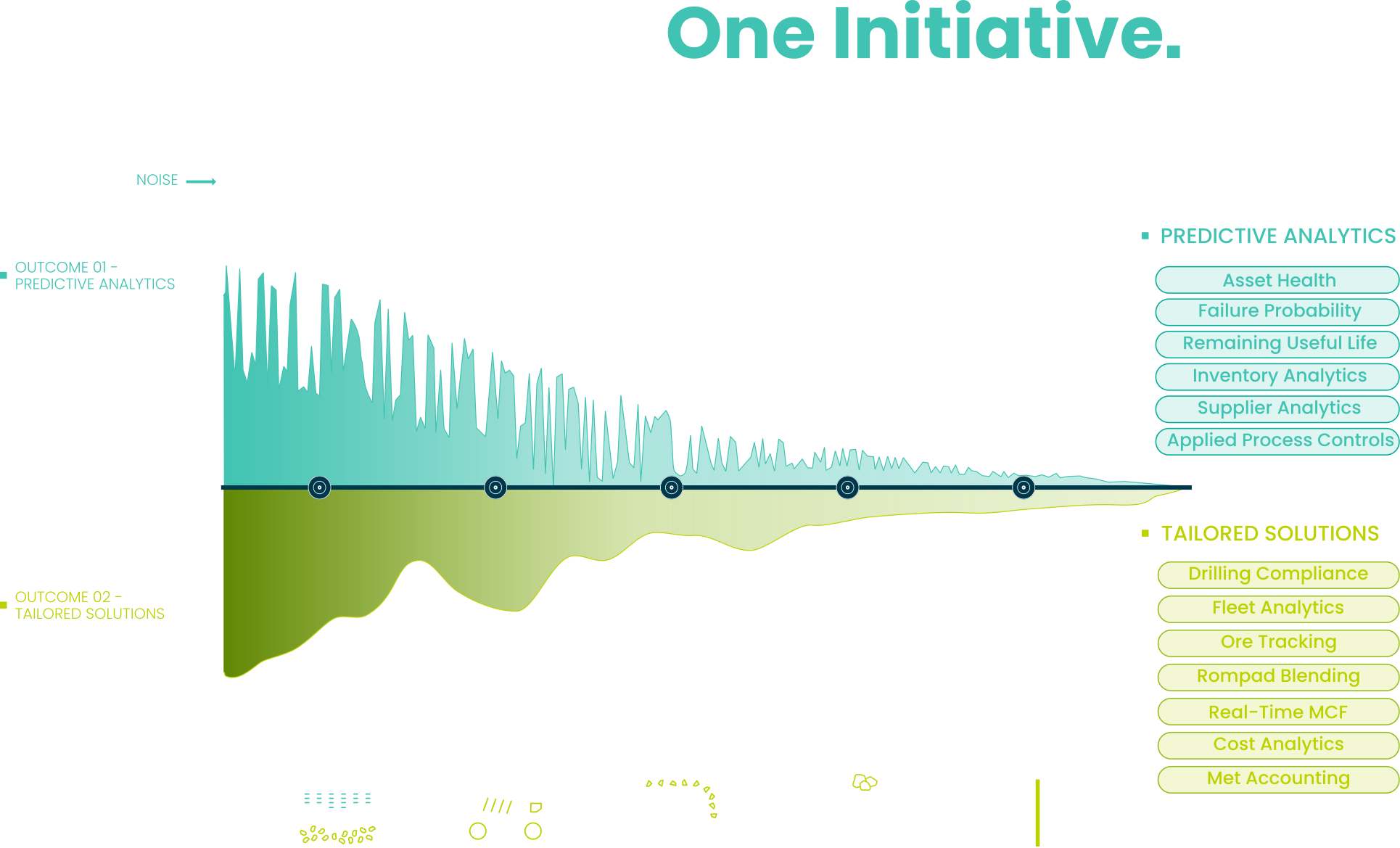
Two forces, one initiative
ONE OPERATING PICTURE
Measurable outcomes.
NOISE →
→ SIGNAL
VARIABILITY →
→ STABILITY
01 · RECOVERY
+2–4%
recovered metal
Grade variance cut from ±2.4% to ±0.8%. AMIRA P754 reconciliation closes the mass-balance loop ore-to-ounce.
02 · UPTIME
−68%
unplanned downtime
Condition-based maintenance driven by asset health, failure probability, and remaining useful life.
03 · COST
−31%
maintenance spend
Cost-per-tonne tracked live by asset, process and shift. Variances caught and corrected within the shift.
Ore to ounce. One picture.
Next step — a 6-week pilot on one circuit, with a measurable baseline.
AM2SYSTEMS.COM · 2026
Operational focus

Problems we solve

We help mining teams build clearer visibility, stronger control, and more reliable decisions across the full operating picture.

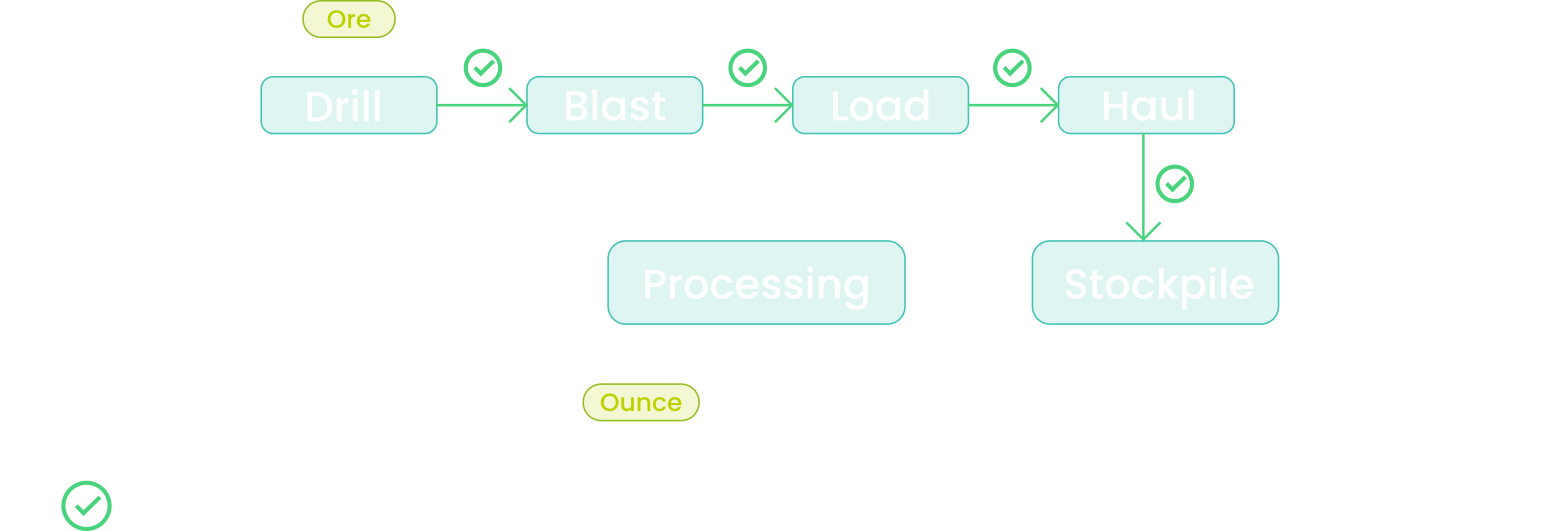
  1. Ore flow visibilityFollow value from ore to ounce

    Connect drill, blast, load, haul, stockpile, and processing data in real time so there is reconciliation at every handover.

    Mining problem diagram: follow value from ore to ounce across handovers
    Ore flow visibility: Follow value from ore to ounce
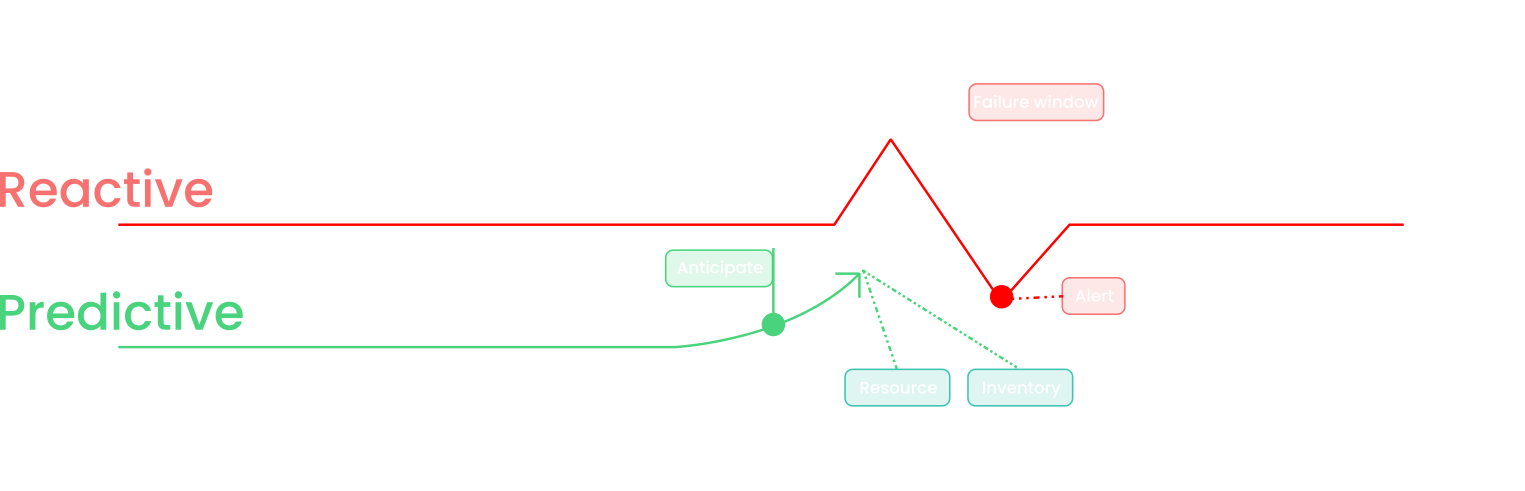
  2. Forward-looking planningShift from reactive to predictive

    Anticipate maintenance, optimise downtime windows, and align resource, inventory, and supply chain decisions against a single forward view.

    Mining problem diagram: shift from reactive operations to predictive planning
    Forward-looking planning: Shift from reactive to predictive
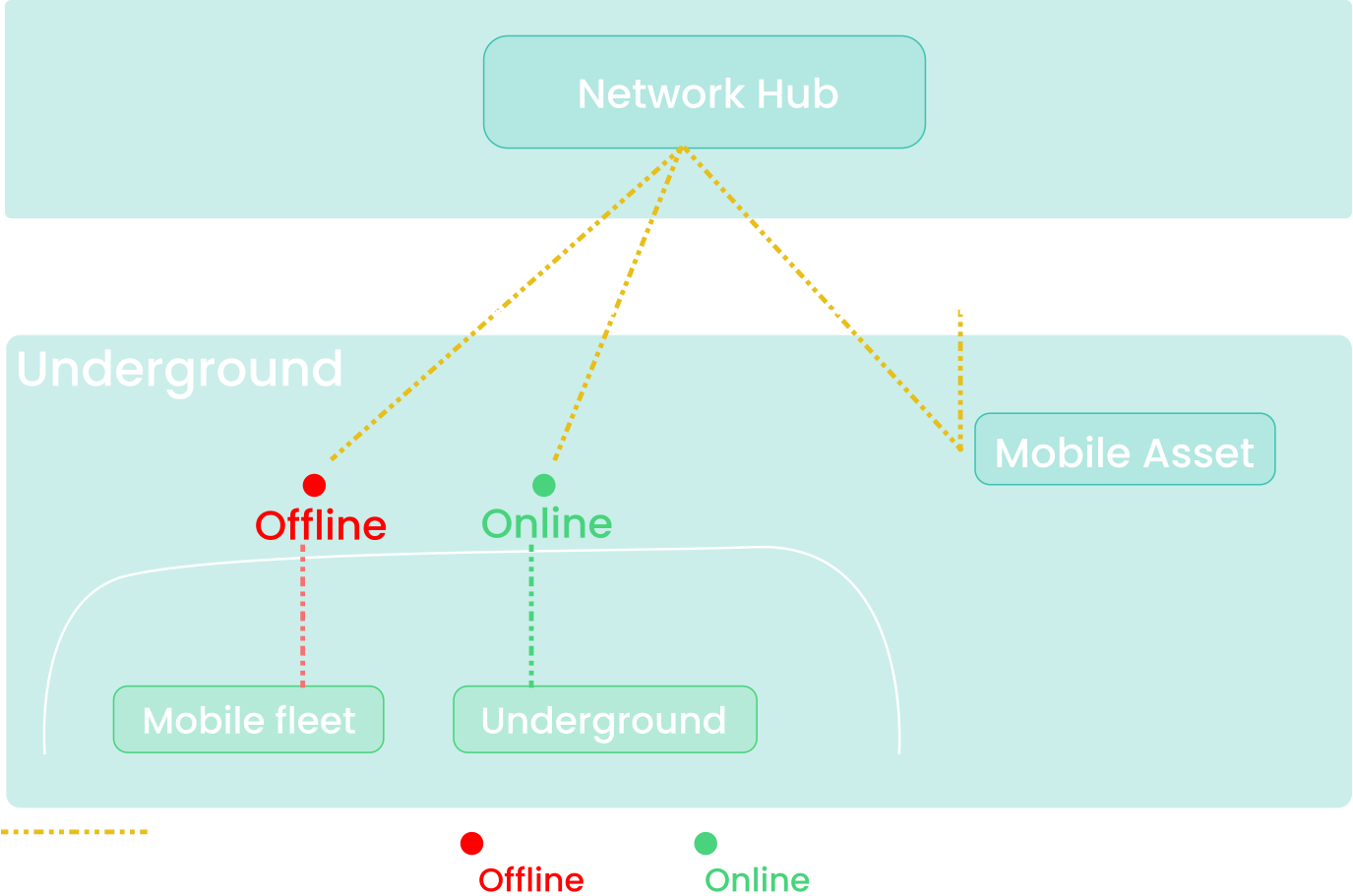
  3. Bring offline areas onlineExtend visibility into hard-to-see environments

    Bring underground operations, mobile fleets, and other low-connectivity areas into view so people and assets no longer disappear from the network.

    Mining problem diagram: extend visibility into underground and mobile fleets
    Bring offline areas online: Extend visibility into hard-to-see environments
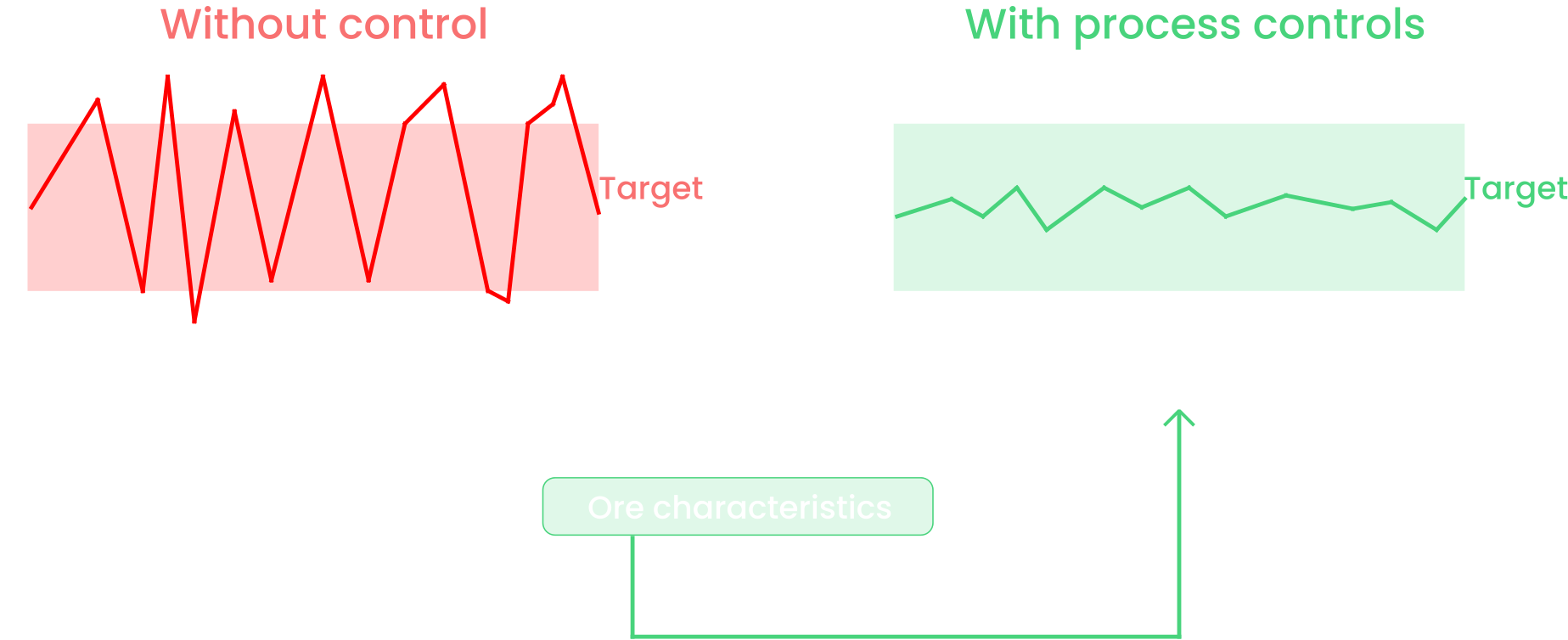
  4. Process stability and controlHold the plant steady across shifts

    Apply process controls that respond as ore characteristics change, protecting recovery, throughput, and quality without relying on individual operator intuition.

    Mining problem diagram: hold the plant steady across shifts
    Process stability and control: Hold the plant steady across shifts
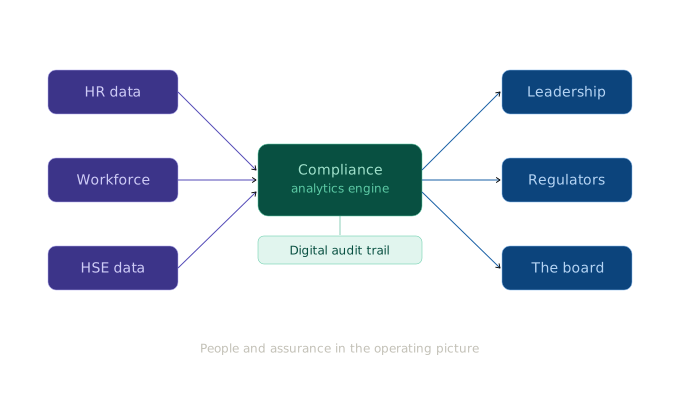
  5. Workforce, health, and complianceBring people and assurance into the operating picture

    Connect HR, workforce, and HSE data with a compliance analytics engine and full digital audit trail for leadership, regulators, and the board.

    Mining problem diagram: workforce health safety and compliance integration
    Workforce, health, and compliance: Bring people and assurance into the operating picture
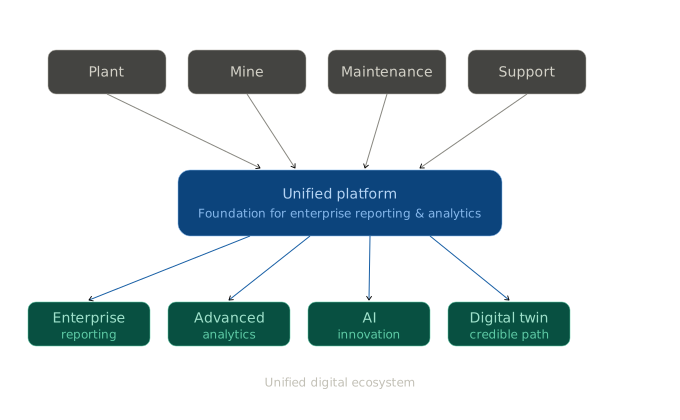
  6. Integration and digital transformationUnify the digital ecosystem

    Unify plant, mine, maintenance, and support systems as the foundation for enterprise reporting, advanced analytics, AI, and a credible path to a working digital twin.

    Mining problem diagram: unify the digital ecosystem across mine and plant with enterprise reporting, advanced analytics, AI, and digital twin outputs
    Integration and digital transformation: Unify the digital ecosystem

Integrated mining
value chain.

Explorationdrill & blastload & haulprocessinglogisticsmarket
Exploration, then drill and blast, then load and haul, then processing, then logistics, then market.
  1. Exploration
  2. drill & blast
  3. load & haul
  4. processing
  5. logistics
  6. market
Operational efficiency
  • Real-time visibility

    End-to-end tonnage, delays, and constraints in one thread instead of rebuilt spreadsheets each shift.

  • Reduced idle time

    Fleet duty cycles, location, and utilization in a single operational context for crews and planners.

  • Faster shift handover

    Digital logs and structured crew-to-crew handover so carry-over work stays visible.

  • Predictive maintenance

    Vibration, lubrication, and CMMS history trend together so teams see drift before a hard stop.

Production optimization
  • Grade control

    Sampling and reconciliation discipline that supports ore versus waste decisions.

  • Mill feed consistency

    Blend and feed strategy aligned to mine plan and stable throughput.

  • Throughput uplift

    Constraint visibility across unit operations when signals stay linked.

  • Recovery improvement

    Metallurgical levers reflected consistently from mine through plant reporting.

Operating cost reduction
  • Lower energy spend

    Usage visibility tied to operating windows, routes, and major assets.

  • Consumable savings

    Reagents, explosives, and fuel signals threaded with procurement and stores.

  • Labor productivity

    Planning, rostering, and execution feedback loops with less rework.

  • Inventory control

    Fewer surprises in spares and consumables when positions stay governed.

Safety and compliance
  • Incident reduction

    Hazards and near misses captured with follow-through in one governed thread.

  • Audit trails

    Time-stamped history for investigations, assurance, and regulator-ready evidence.

  • Fatigue management

    Roster and exception signals surfaced to supervisors before breaches pile up.

  • Regulator reporting

    Repeatable submissions built from governed data instead of manual reassembly.

Strategic decision-making
  • Single source of truth

    Finance, operations, and maintenance on linked views of the same production story.

  • Scenario planning

    Stress-test price, throughput, and cost assumptions with traceable inputs.

  • Reserve management

    Mine-life decisions supported by consistent resource and reserves models.

  • Investor confidence

    Clearer ESG and production narratives backed by controlled disclosure paths.

Operational efficiency capabilities: Real-time visibility, Reduced idle time, Faster shift handover, Predictive maintenance

Operational efficiency

  • Real-time visibility

    End-to-end tonnage, delays, and constraints in one thread instead of rebuilt spreadsheets each shift.

  • Reduced idle time

    Fleet duty cycles, location, and utilization in a single operational context for crews and planners.

  • Faster shift handover

    Digital logs and structured crew-to-crew handover so carry-over work stays visible.

  • Predictive maintenance

    Vibration, lubrication, and CMMS history trend together so teams see drift before a hard stop.

Production optimization capabilities: Grade control, Mill feed consistency, Throughput uplift, Recovery improvement

Production optimization

  • Grade control

    Sampling and reconciliation discipline that supports ore versus waste decisions.

  • Mill feed consistency

    Blend and feed strategy aligned to mine plan and stable throughput.

  • Throughput uplift

    Constraint visibility across unit operations when signals stay linked.

  • Recovery improvement

    Metallurgical levers reflected consistently from mine through plant reporting.

Operating cost reduction capabilities: Lower energy spend, Consumable savings, Labor productivity, Inventory control

Operating cost reduction

  • Lower energy spend

    Usage visibility tied to operating windows, routes, and major assets.

  • Consumable savings

    Reagents, explosives, and fuel signals threaded with procurement and stores.

  • Labor productivity

    Planning, rostering, and execution feedback loops with less rework.

  • Inventory control

    Fewer surprises in spares and consumables when positions stay governed.

Safety and compliance capabilities: Incident reduction, Audit trails, Fatigue management, Regulator reporting

Safety and compliance

  • Incident reduction

    Hazards and near misses captured with follow-through in one governed thread.

  • Audit trails

    Time-stamped history for investigations, assurance, and regulator-ready evidence.

  • Fatigue management

    Roster and exception signals surfaced to supervisors before breaches pile up.

  • Regulator reporting

    Repeatable submissions built from governed data instead of manual reassembly.

Strategic decision-making capabilities: Single source of truth, Scenario planning, Reserve management, Investor confidence

Strategic decision-making

  • Single source of truth

    Finance, operations, and maintenance on linked views of the same production story.

  • Scenario planning

    Stress-test price, throughput, and cost assumptions with traceable inputs.

  • Reserve management

    Mine-life decisions supported by consistent resource and reserves models.

  • Investor confidence

    Clearer ESG and production narratives backed by controlled disclosure paths.

Bottom-line outcomes

  • Higher ore yield
  • Lower cost per tonne
  • Safer workforce
  • Better capital allocation

Typical industry benchmarks below are illustrative bands only—not a forecast for any named asset or site.

5–15%
Productivity uplift when crews and planners work from the same live operational picture.
10–20%
Cost per tonne reduction when energy, consumables, and labour signals stay aligned.
20–40%
Fewer recordable safety incidents when hazards, fatigue, and follow-up stay in one thread.
2–5%
Recovery improvement when grade, feed, and plant data reconcile without blind spots.
30–50%
Less manual reporting when month-end packs pull from governed integrations instead of extracts.
15–25%
Maintenance cost saving when work orders, spares, and downtime context align to production.

Each pillar lists four focus areas · Benchmarks vary by commodity, baseline, and operating maturity.

Value chain

Functions we serve

Operations

MiningProcessMineral resource managementMaintenance

Enterprise functions

Supply chainFinanceHuman resources

Performance, risk, and leadership

Health, safety, and environmentExecutive reporting
One partner model

Why AM SQUARED for mining

Mining environments need more than dashboards. They need practical systems that support action.

AM SQUARED combines mining context with advisory, practical implementation, and platform delivery in one partner model. We build systems that reinforce accountability, control, and measurable business value while avoiding unnecessary complexity.

Next step

Looking to improve visibility, reporting, or control across your mining operation?

Start the conversation and we will help define the right problem, the right scope, and the right path forward.